

Boxwood Winter Damage in Central Illinois: What Homeowners Are Seeing (and What to Do About It)
May 11, 2026 - Scotts Exterior Maintenance
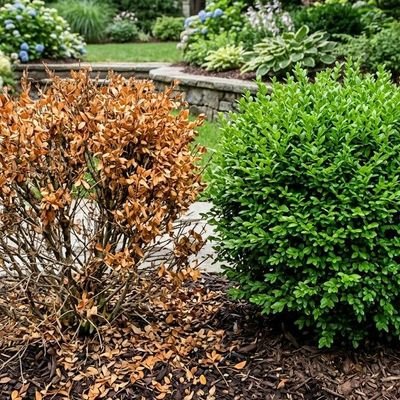
Boxwood Winter Damage in Central Illinois: What Homeowners Are Seeing (and What to Do About It)

If your boxwoods came out of winter looking pale, bronze, or just plain unhealthy—you’re not alone. Across Central Illinois, many homeowners are noticing signs of stress that point to winter-related malnutrition and damage. The good news: most of it is fixable with the right approach.
Let’s break down what’s happening and answer the most common questions.
What does “malnutrition” in boxwoods actually mean?
When we talk about malnutrition in boxwoods, we’re usually referring to a lack of essential nutrients—like nitrogen, iron, or magnesium—that the plant needs to stay green and healthy.
But here’s the key:
In winter, it’s not always a lack of nutrients in the soil. It’s the plant’s inability to absorb them.
Cold temperatures, frozen ground, and dry winds all limit root function. So even if your soil is fine, your boxwoods can still come out of winter looking nutrient-deficient.
Why did this happen over the winter?
Central Illinois winters can be especially tough on evergreens like boxwoods. A few main factors cause the issue:
1. Winter Burn (Desiccation)
Boxwoods continue to lose moisture through their leaves in winter, especially on sunny or windy days. But if the ground is frozen, roots can’t replace that moisture. This leads to dried-out foliage and discoloration.
2. Temperature Swings
Warm spells followed by sudden freezes can shock the plant, damaging tissues and affecting nutrient uptake.
3. Frozen Soil
When the ground stays frozen for long periods, roots essentially “shut down,” limiting nutrient and water absorption.
4. Wind Exposure
Open areas with heavy winter wind can worsen dehydration and stress.
What are the signs of winter-related malnutrition?
Look for these common symptoms in early spring:
-
Yellowing or pale green leaves
-
Bronze or orange discoloration
-
Leaf drop or thinning
-
Dry, brittle foliage
-
Patchy or uneven color throughout the plant
These symptoms often show up on the side of the plant facing wind or sun.

Will my boxwoods recover?
In many cases—yes.
Boxwoods are resilient, and if the damage isn’t too severe, they can bounce back with proper care. However, patience is important. Recovery may take several weeks or even a full growing season.
What should I do right now?
1. Wait before pruning (initially)
Don’t rush to cut everything back early in spring. Give the plant time to push new growth so you can clearly see what’s dead vs. alive.
2. Perform a light scratch test
Gently scratch the bark on affected branches:
-
Green underneath = alive
-
Brown/tan = dead
3. Prune dead growth (once new growth starts)
Remove any clearly dead or severely damaged branches to encourage healthy regrowth.
4. Deep water the plants
As soon as the ground thaws, give your boxwoods a deep watering. This helps restore moisture and kickstart recovery.
Should I fertilize my boxwoods?
Yes—but timing and approach matter.
-
Apply a balanced, slow-release fertilizer in early to mid-spring
-
Avoid over-fertilizing—it can stress already weakened plants
-
Consider a soil test if issues persist (this tells you exactly what’s missing)
Will they turn green again?
If the damage is mild to moderate, you should start seeing fresh green growth as temperatures warm up.
However:
-
Bronze or damaged leaves may not turn green again
-
New growth will be your indicator of recovery
In severe cases, parts of the plant may not recover and will need pruning or replacement.
How can I prevent this next winter?
A little prep goes a long way:
-
Water deeply in late fall before the ground freezes
-
Apply mulch around the base to protect roots
-
Use burlap wraps or wind barriers in exposed areas
-
Avoid late-season fertilizing (this can promote tender growth vulnerable to cold)
When should I consider replacing a boxwood?
If:
-
More than 50% of the plant is dead
-
There’s little to no new growth by early summer
-
The structure is heavily compromised
…it may be more cost-effective to replace rather than rehabilitate.

Final Thoughts
Winter damage and nutrient stress in boxwoods are extremely common in climates like Central Illinois—especially after harsh or inconsistent winters. While it can be alarming, most cases are manageable with the right care.
If you’re unsure how severe the damage is or what your next step should be, getting a professional assessment (and possibly a soil test) can save you time and guesswork.